Welcome to Nepal! Upon landing at Tribhuvan International Airport in Kathmandu, you’ll be greeted by our representative from Hidden Path Treks & Expeditions and transferred to your hotel. Kathmandu, the vibrant capital city, is a bustling hub of culture, spirituality, and tradition. After checking in and freshening up, you may wish to explore the colorful streets of Thamel or simply rest in preparation for the exciting journey ahead. In the evening, a welcome dinner with your guide and fellow trekkers offers the perfect opportunity to discuss the adventure that awaits.
After a leisurely breakfast, we begin our drive eastward to Manthali, a small town in Ramechhap district where we will stay overnight. This 5–6 hour scenic drive through rolling hills and terraced villages allows you to witness rural Nepali life up close. The journey is a beautiful prelude to the Himalayas, with mist-covered hills and river valleys accompanying us. Manthali is quieter and less touristy, offering a good night’s rest before tomorrow’s early mountain flight.
We rise early for a short but thrilling flight to Lukla (2,860 m)—the gateway to Everest. As the plane skims above the Himalayan ridges, you'll glimpse your first views of snow-dusted peaks. After meeting our porter team in Lukla, we begin our trek. Today’s walk is relatively easy, descending gently through pine forests and past fluttering prayer flags and mani walls. By afternoon, we arrive in Phakding, a peaceful village by the Dudh Koshi River. A great start to your trekking adventure!
Our trail today winds through suspension bridges, prayer wheels, and dense rhododendron forests. We officially enter Sagarmatha National Park and begin a steep ascent towards Namche Bazaar, the Sherpa capital. Along the way, catch your first glimpse of Mount Everest peeking behind Lhotse and Nuptse. Upon reaching Namche, the horseshoe-shaped town built into the hillside, you’ll find bakeries, shops, and teahouses that make this village uniquely welcoming.
Acclimatization is crucial for your health and success on this high-altitude journey. Today, we take a short hike to Everest View Hotel (3,880 m), which offers panoramic vistas of Everest, Ama Dablam, and other majestic peaks. We also explore the Sherpa Culture Museum and nearby villages like Khumjung. This rest day helps your body adjust to the elevation while giving you deeper insights into the Sherpa lifestyle.
After breakfast, we follow a scenic trail hugging the hillside above the Dudh Koshi River. The path descends through forests before a steady climb to Tengboche, home to the region’s most important monastery, Tengboche Monastery. Surrounded by panoramic views of Ama Dablam, Everest, and Thamserku, this sacred site is a perfect place for reflection and spiritual calm.
The trail descends through lush forests before crossing the Imja Khola. We gradually ascend past the village of Pangboche and into the alpine zone where trees give way to shrubs. Reaching Dingboche, you’ll find expansive views of Ama Dablam, Island Peak, and Lhotse. This peaceful village is nestled in a wide valley and is a great spot to continue acclimatizing.
Today’s trail climbs gradually above the treeline, passing memorial chortens dedicated to fallen climbers at Thukla Pass. The atmosphere becomes increasingly stark and dramatic as we approach Lobuche, a small settlement surrounded by glacial moraine. The landscape hints at the epic scale of the Khumbu Glacier and the high Himalayas awaiting us.
This is one of the most anticipated days. We hike to Gorak Shep, the last village before Everest Base Camp. After a quick lunch, we head along the glacier trail to the Everest Base Camp (5,364 m) the legendary site where climbers begin their ascent of the world’s tallest mountain. Standing at base camp, surrounded by prayer flags and ice formations, is a moment you’ll never forget.
We wake early to climb Kala Patthar, the best viewpoint for unobstructed sunrise views of Mount Everest, Pumori, and Nuptse. The golden glow on the peak is breathtaking. After soaking in the views, we descend back to Gorak Shep for breakfast, then continue downhill to Lobuche, retracing our steps through the glacial terrain.
An adventurous day lies ahead as we cross the high-altitude Kongma La Pass (5,535 m). The climb is strenuous but rewarding, with awe-inspiring views of Nuptse, Makalu, and Island Peak. After the pass, we descend carefully into the Imja Valley and reach Chhukung, a quiet settlement surrounded by massive Himalayan walls. This trail is less traveled, offering solitude and grandeur.
We hike through rocky terrain, skirting glacial moraines and stunning alpine scenery en route to Island Peak Base Camp. The trail becomes more rugged as we get closer, and the sense of excitement builds. Our base camp sits below a dramatic backdrop of ice and rock your staging ground for tomorrow’s summit attempt. After settling in, we prepare mentally and physically for the climb.
Today is dedicated to mountaineering training. Our experienced guides from Hidden Path Treks & Expeditions will instruct you in rope handling, using ascenders, harnesses, ice axes, and crampons. You'll also practice fixed-line climbing techniques on nearby slopes. This essential preparation builds confidence and ensures your safety for the summit push.
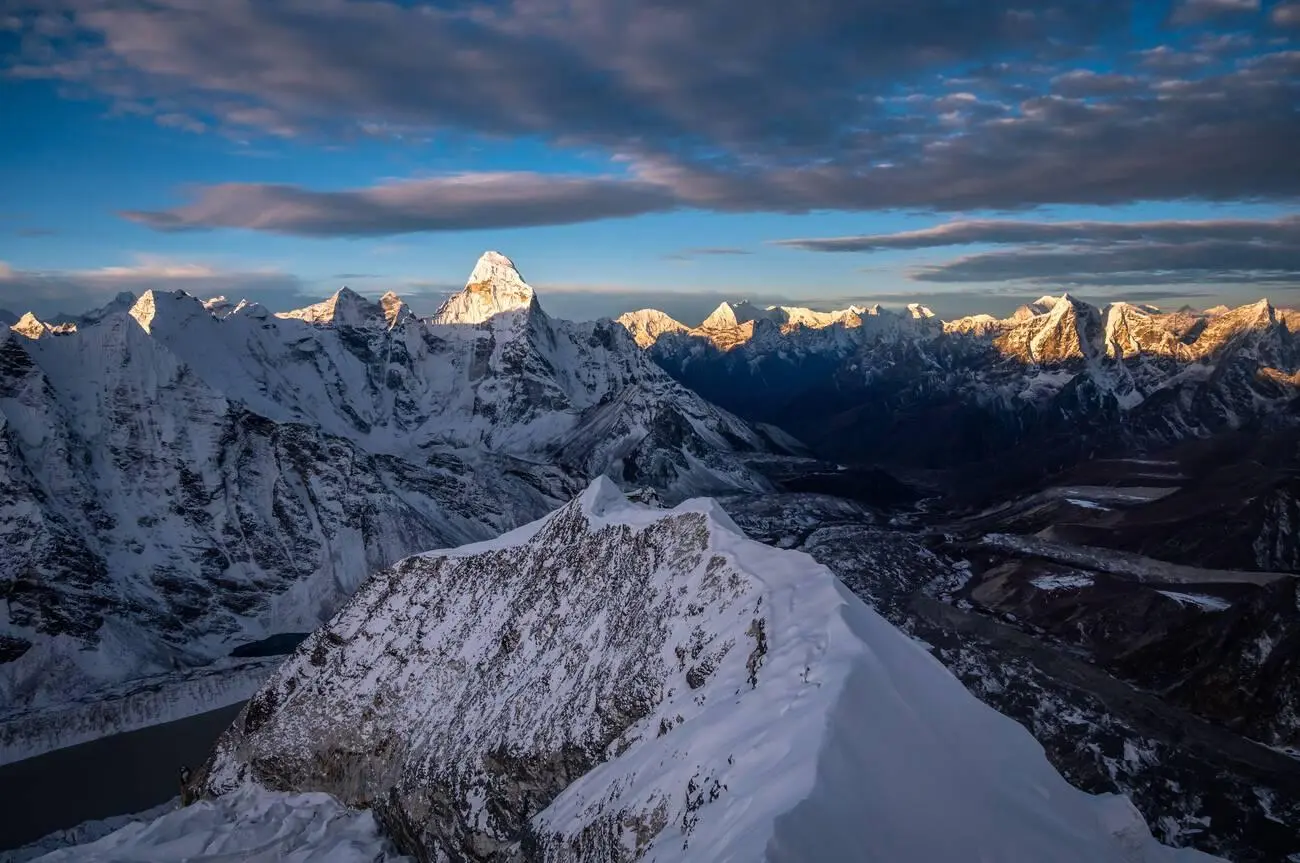
We begin our summit push around midnight, ascending over rock and ice under the starlit sky. Reaching the glacier, we rope up and navigate crevasses and steep slopes. The final headwall is a thrilling climb on fixed ropes. Standing atop Island Peak, you are surrounded by giants: Lhotse, Makalu, Baruntse, and Ama Dablam. After soaking in the achievement, we carefully descend back to base camp for a well-earned rest.
With the summit behind us, we descend into warmer, greener terrain. Our return to Pangboche, one of the oldest Sherpa villages, feels both celebratory and nostalgic. You can visit the Pangboche Monastery, which is said to have ancient relics, including a supposed Yeti scalp. A peaceful night in a cozy teahouse awaits.
We retrace our steps back to Namche Bazaar, following the familiar river valleys and suspension bridges. With lower elevation, your body relaxes and energy returns. Back in Namche, it’s time to indulge in a hearty meal, shop for souvenirs, or simply reflect on the mountains conquered and memories made.
The final trekking day leads us back to Lukla, passing small settlements and prayer-inscribed stones. A bittersweet descent, it’s a time to celebrate your journey with your team. In Lukla, a farewell dinner with your guides and porters marks the end of the trail but not of your adventure.
We take an early flight back to Kathmandu, where you’ll return to your hotel for a hot shower and well-earned relaxation. The day is free to explore the city’s temples, shops, or even treat yourself to a spa. In the evening, Hidden Path Treks & Expeditions hosts a farewell dinner to toast your successful expedition.
After breakfast, our representative will escort you to the airport for your final departure. With memories of the Himalayas in your heart and photographs capturing the peaks you’ve conquered, you return home transformed by this journey of a lifetime.
Everest Base Camp with Island Peak Climbing is a unique adventure that combines the classic trekking experience to Everest Base Camp (EBC) with the thrill of summiting Island Peak (6,189m/20,305ft), one of Nepal’s most popular trekking peaks. This trip is perfect for physically fit and adventurous trekkers who want to experience both high-altitude trekking and alpine climbing. Whether you're a seasoned trekker aiming to reach new heights, or a mountaineering enthusiast looking for your first Himalayan summit, this combined expedition offers the best of both worlds.
This journey is considered strenuous due to the high altitude, variable weather conditions, and technical aspects of the climb. The trek to EBC itself is moderately difficult, involving several days of sustained hiking over rugged terrain. Climbing Island Peak, however, requires basic mountaineering skills, including the use of crampons, ropes, and ice axes. Hidden Path Treks & Expeditions ensures all climbers receive proper pre-climb training and are guided by experienced climbing guides to ensure safety and success.
The ideal seasons for Everest Base Camp and Island Peak Climbing are spring (March to May) and autumn (September to November). These months offer the most stable weather, clearer skies, and favorable climbing conditions. Hidden Path Treks & Expeditions schedules departures during these peak periods to maximize your chances of a successful and enjoyable adventure.
While prior high-altitude trekking experience is strongly recommended, you don't necessarily need extensive climbing experience. However, a basic understanding of mountaineering techniques and the ability to walk with crampons and harness is helpful. Hidden Path Treks & Expeditions provides a detailed pre-climb briefing and basic climbing training at Island Peak Base Camp, covering rope work, glacier travel, and ice climbing techniques.
Yes, all required permits are included in your package with Hidden Path Treks & Expeditions. These typically include the Sagarmatha National Park Entry Permit, Khumbu Pasang Lhamu Rural Municipality Permit, and the Island Peak Climbing Permit issued by the Nepal Mountaineering Association (NMA). We handle all the paperwork so you can focus on the adventure.
Our comprehensive package includes domestic flights (Kathmandu–Lukla–Kathmandu), all necessary permits, experienced trekking and climbing guides, porters, accommodation in teahouses during the trek, camping and climbing gear at Island Peak Base Camp, meals during the expedition, and emergency support. We aim to provide a safe, comfortable, and well-organized experience from start to finish.
You’ll need standard trekking gear (trekking boots, warm clothing, sleeping bag, backpack) and personal climbing equipment such as crampons, ice axe, climbing harness, helmet, and mountaineering boots. Hidden Path Treks & Expeditions can help arrange rental gear in Kathmandu for those who don’t have everything. A detailed packing list will be provided upon booking.
During the trek to Everest Base Camp, you'll stay in local teahouses offering basic but comfortable lodging with meals. At Island Peak Base Camp, the accommodation shifts to tented camps with all necessary logistics handled by our support crew. Meals at base camp are nutritious and designed to maintain your energy at high altitudes.
Acute Mountain Sickness (AMS) is a serious concern at high elevations. Our itineraries are carefully planned with acclimatization days to reduce the risk. Our guides are trained in high-altitude first aid, and we carry oxygen cylinders, oximeters, and a comprehensive medical kit. In case of emergency, Hidden Path Treks & Expeditions can arrange helicopter evacuation and immediate medical assistance.
Hidden Path Treks & Expeditions is a locally owned and operated adventure company committed to providing personalized service, expert guidance, and ethical tourism. Our team comprises experienced guides with deep knowledge of the Everest region and Himalayan climbing. Safety, environmental responsibility, and your satisfaction are our top priorities. With us, you're not just a client – you’re a valued part of the journey.