Upon your arrival at Tribhuvan International Airport in Kathmandu, a representative from Hidden Path Treks & Expeditions will greet you and transfer you to your hotel. After check-in and some rest, you can explore the vibrant streets of Thamel or nearby cultural sites. In the evening, you’ll meet your trekking guide for a briefing about the Nar Phu Valley Trek, including gear checks and last-minute preparations. Overnight in Kathmandu.
Today you’ll explore the historical and cultural wonders of Kathmandu Valley. Guided by a local expert, you’ll visit UNESCO World Heritage Sites such as Swayambhunath (Monkey Temple), Boudhanath Stupa, Pashupatinath Temple, and the ancient palace square of Patan or Bhaktapur. These sites offer deep insight into Nepal’s religious diversity and rich architecture. After sightseeing, you’ll return to the hotel for a final pre-trek meeting and packing session. Overnight in Kathmandu.
An early morning start takes you on a long but scenic drive to Koto, a gateway village into the Nar Phu Valley. The journey follows the Prithvi Highway and gradually climbs alongside the Marsyangdi River, offering views of terraced hills, lush forests, and rural settlements. After reaching Besisahar, you switch to a rugged mountain road that leads to Koto, located in the Manang District. The drive takes around 9 to 10 hours in total. Overnight in a teahouse in Koto.
Today marks the beginning of the actual trek into the restricted Nar Phu region. After registering permits at the police checkpost, you follow a trail that winds through dense pine forests and alongside the roaring Nar Khola (river). Suspension bridges, waterfalls, and occasional yak sightings make the trail both scenic and adventurous. After a steady ascent, you reach Meta, a remote Tibetan-style settlement set on a windswept plateau. Overnight in a simple teahouse in Meta.
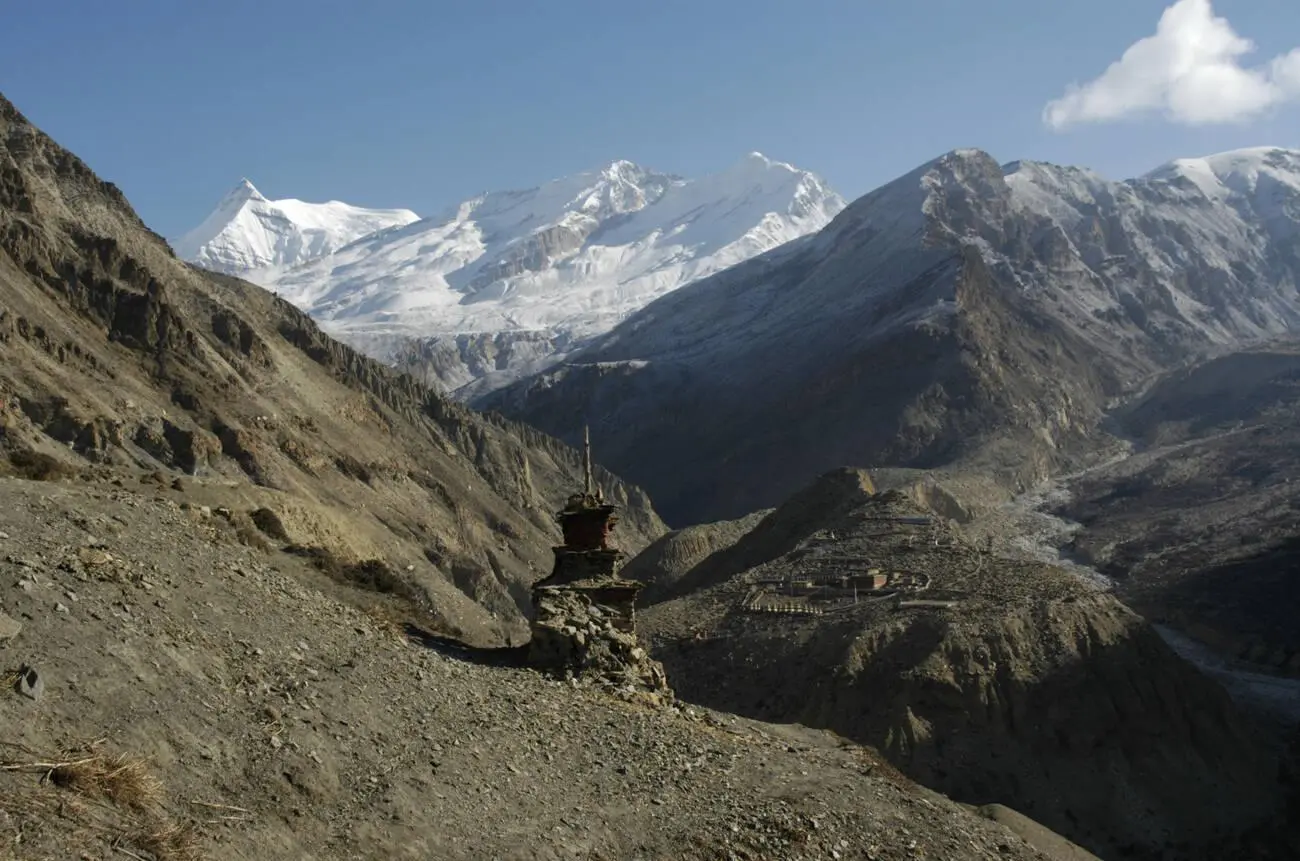
The trail continues through arid, high-altitude landscapes with dramatic views of snowcapped peaks. You pass ancient Chortens, colorful prayer flags, and deserted stone villages that hint at the region’s spiritual heritage. As you approach Phu Gaon, the valley opens up to reveal one of the most remote Tibetan villages in Nepal, tucked beneath massive cliffs and glaciers. The people of Phu live a traditional lifestyle, herding yaks and practicing Buddhism. Overnight in Phu Gaon.
To help your body adjust to the altitude, today is a rest and acclimatization day. You can hike to the Tashi Lhakhang Monastery, an important spiritual site in the region, or explore the surrounding hills for better views of Himlung Himal and other peaks. Interacting with the locals offers a deep cultural immersion, as Phu remains largely untouched by modern development. Overnight in Phu Gaon.
Leaving Phu behind, you descend the same trail briefly before branching off toward Nar Phedi, located near the Nar River. This is a quiet, serene location where you'll stay in a simple monastery-run teahouse operated by local nuns. It’s a unique opportunity to observe Buddhist monastic life and enjoy a peaceful evening in this spiritually rich setting. Overnight at Nar Phedi.
Today’s short but steep ascent brings you to Nar Village, a larger and more vibrant settlement than Phu. The trail offers excellent views of Pisang Peak and other snowcapped ranges. Nar is known for its cluster of traditional homes, narrow alleys, and ancient monasteries. After reaching the village, you’ll have the rest of the day to explore and engage with locals or simply rest in preparation for the challenging Kang La Pass crossing ahead. Overnight in Nar.
This is the most demanding and rewarding day of the trek. Starting early, you make a long and steady climb to the Kang La Pass, which stands at 5,320 meters. From the top, you are greeted with breathtaking panoramic views of the Annapurna range, including Annapurna II, Gangapurna, and Tilicho Peak. After soaking in the views, you descend steeply to the beautiful village of Ngawal, nestled along the classic Annapurna Circuit trail. Overnight at a teahouse in Ngawal.
After breakfast, you begin the final leg of the journey with a drive back to Kathmandu, retracing the scenic route along rivers, hills, and traditional villages. Upon arrival in Kathmandu, you can relax at your hotel or do some last-minute souvenir shopping. In the evening, enjoy a farewell dinner or a stroll through the city’s bustling neighborhoods. Overnight in Kathmandu.
Today marks the end of your unforgettable Nar Phu Valley adventure with Hidden Path Treks & Expeditions. Depending on your flight schedule, a company representative will transfer you to the airport for your onward journey. You leave Nepal with lifelong memories of hidden valleys, ancient culture, and dramatic Himalayan landscapes.
The Nar Phu Valley Trek is a remarkable journey into one of Nepal’s most remote and untouched regions, tucked between the Annapurna and Manaslu areas. Officially opened to trekkers in 2002, the Nar and Phu Valleys offer a rare blend of raw Himalayan landscapes and preserved Tibetan-influenced culture. Located in the Manang district, this off-the-beaten-path trek takes you through deep gorges, ancient Buddhist monasteries, high mountain passes, yak herding settlements, and fortified villages that have changed little in centuries. Hidden Path Treks & Expeditions proudly offers this trek to those seeking true wilderness and cultural depth far from the popular trails.
The trek is considered moderate to challenging, primarily due to its high elevation, remote terrain, and limited infrastructure. Trekkers reach altitudes over 5,300 meters (at Kang La Pass), so good physical conditioning and some previous trekking experience are highly recommended. Daily walks average 5–7 hours over rough and rugged trails. Our experienced guides at Hidden Path Treks & Expeditions ensure a safe and well-paced journey, with proper acclimatization days and full support throughout the trek.
The trek generally spans 15 to 18 days, depending on route choices and acclimatization needs. It starts with a drive from Kathmandu to Koto (near Chame), where the trail branches off from the classic Annapurna Circuit. The trek then enters the remote Nar and Phu Valleys, where trekkers spend time exploring ancient monasteries and isolated villages. After crossing the high Kang La Pass (5,306 m), the trail rejoins the Annapurna Circuit near Ngawal and continues toward Manang. From here, trekkers can either descend or continue to Thorong La Pass and finish in Jomsom. Hidden Path Treks & Expeditions can customize the itinerary to match your timeframe and preferences.
The ideal trekking seasons are spring (March to May) and autumn (September to November). During these months, weather conditions are stable, skies are clear, and temperatures are moderate. Spring brings wildflowers and blooming rhododendrons, while autumn provides the clearest mountain views. Winter trekking is possible but cold and logistically more difficult due to snow-covered passes. The monsoon season (June to August) is not recommended because of landslides and slippery trails.
The Nar Phu Valley is a restricted area, so a Restricted Area Permit (RAP) is required, in addition to the Annapurna Conservation Area Permit (ACAP) and TIMS card. The RAP can only be obtained through a registered trekking agency like Hidden Path Treks & Expeditions, and you must trek with a licensed guide. We take care of all permit arrangements for you, making the process smooth and fully compliant with government regulations.
Accommodation is primarily in basic teahouses and homestays within the Nar and Phu Valleys. These are simple yet welcoming, often with limited facilities due to the remote location. In larger villages and as the trail rejoins the Annapurna Circuit, the teahouses are more developed. Meals consist of traditional Nepali food such as dal bhat, Tibetan bread, soups, momos, and rice dishes. Hidden Path Treks & Expeditions ensures your meals are hygienic, energy-packed, and prepared with locally sourced ingredients wherever possible.
Yes, due to the high elevations involved, altitude sickness is a valid concern. The itinerary includes gradual ascents and rest days to aid acclimatization. Our guides are trained to recognize symptoms of AMS (Acute Mountain Sickness) and will adjust the pace, arrange emergency care, or descend if necessary. We recommend that all trekkers stay well-hydrated, avoid alcohol, and follow guide instructions carefully. Having travel insurance that covers high-altitude trekking and helicopter evacuation is strongly advised.
You will need warm layered clothing, a down jacket, waterproof gear, sturdy trekking boots, sleeping bag, sunglasses, sunscreen, and a headlamp. A daypack, trekking poles, and personal medications are also essential. Hidden Path Treks & Expeditions provides a comprehensive packing checklist after booking and can help arrange rental gear if you’re missing anything.
The Nar Phu Valley is highly remote, with limited mobile network access and no internet connectivity in most parts of the valley. This disconnection is part of what makes the experience so special—offering a true digital detox and immersion into Himalayan wilderness and culture. We carry communication devices for emergency contact and always prioritize safety.
We believe in ethical trekking practices that benefit the environment and local communities. Our treks are organized with local guides and porters, and we use locally owned lodges whenever possible. We follow Leave No Trace principles, limit plastic usage, and educate our clients on cultural sensitivity. A portion of our profits supports community development and education programs in the remote areas we trek through.
To book, simply contact us via our website, email, or social media. Share your preferred dates, group size, and any specific requirements. Our team will respond with a personalized itinerary, pricing, and gear checklist. Once you're ready, we handle all logistics—permits, accommodations, transportation, guides—so you can focus on enjoying the adventure of a lifetime.