Upon your arrival at Tribhuvan International Airport in Kathmandu, a representative from Hidden Path Treks & Expeditions will warmly welcome you and transfer you to your hotel in the heart of the city. After check-in and some rest, you’ll be briefed on the trek itinerary, meet your guide, and have the chance to ask any last-minute questions. The evening is free to explore the vibrant streets of Thamel or enjoy a traditional Nepali dinner.
After an early breakfast, we take a scenic flight to Bhadrapur in eastern Nepal. From here, a private vehicle will drive us through the lush hills and terraced farmlands of Ilam to reach Phidim. This charming hill town, rich in tea gardens and local culture, offers a relaxing overnight stay before the trek begins.
We continue our journey with a drive to Sukhetar, the gateway to the Kanchenjunga region. From Sukhetar, the trek officially begins with a pleasant downhill walk through villages and forests, leading us to the small settlement of Lali Kharka. This is a great warm-up day with lovely views and interactions with local communities.
Today's trek takes us through forested trails and terraced fields. After several ups and downs, we reach the pass of Kande Bhanjyang, where we enjoy a peaceful setting with panoramic views of the surrounding hills. The village is an excellent spot to learn about rural life in eastern Nepal.
We descend through rhododendron forests and scattered traditional settlements. The trail meanders above the Kabeli River before ascending to the ridge of Phompe Danda. The ridge-top location provides sweeping views of the rolling green hills and distant mountain peaks.
Today's walk takes us deeper into the Kanchenjunga Conservation Area. We pass through traditional Sherpa and Rai villages, crossing suspension bridges and following the riverside. Yangphudin, also known as Sherpa Gaon, is a culturally rich settlement where we can experience warm Sherpa hospitality.
A challenging yet rewarding day as we trek through thick forests and ascend steadily toward the Lashe Tham-La pass. After crossing the pass, the landscape begins to change with glimpses of the higher Himalayas. We reach Doronding for a well-earned rest surrounded by alpine beauty.
The trail ascends alongside the Simbuwa Khola River as the vegetation becomes more alpine. We pass through moss-laden forests and yak herders’ shelters. The air becomes thinner as we reach Tseram, a scenic resting place with awe-inspiring views of the Yalung Glacier and nearby peaks.
Today is a highlight of the trek. We take an acclimatization hike to Oktang, offering close-up views of Mount Kanchenjunga and surrounding giants like Jannu and Kabru. This vantage point is sacred to the locals and provides an unforgettable panorama of the southern face of Kanchenjunga.
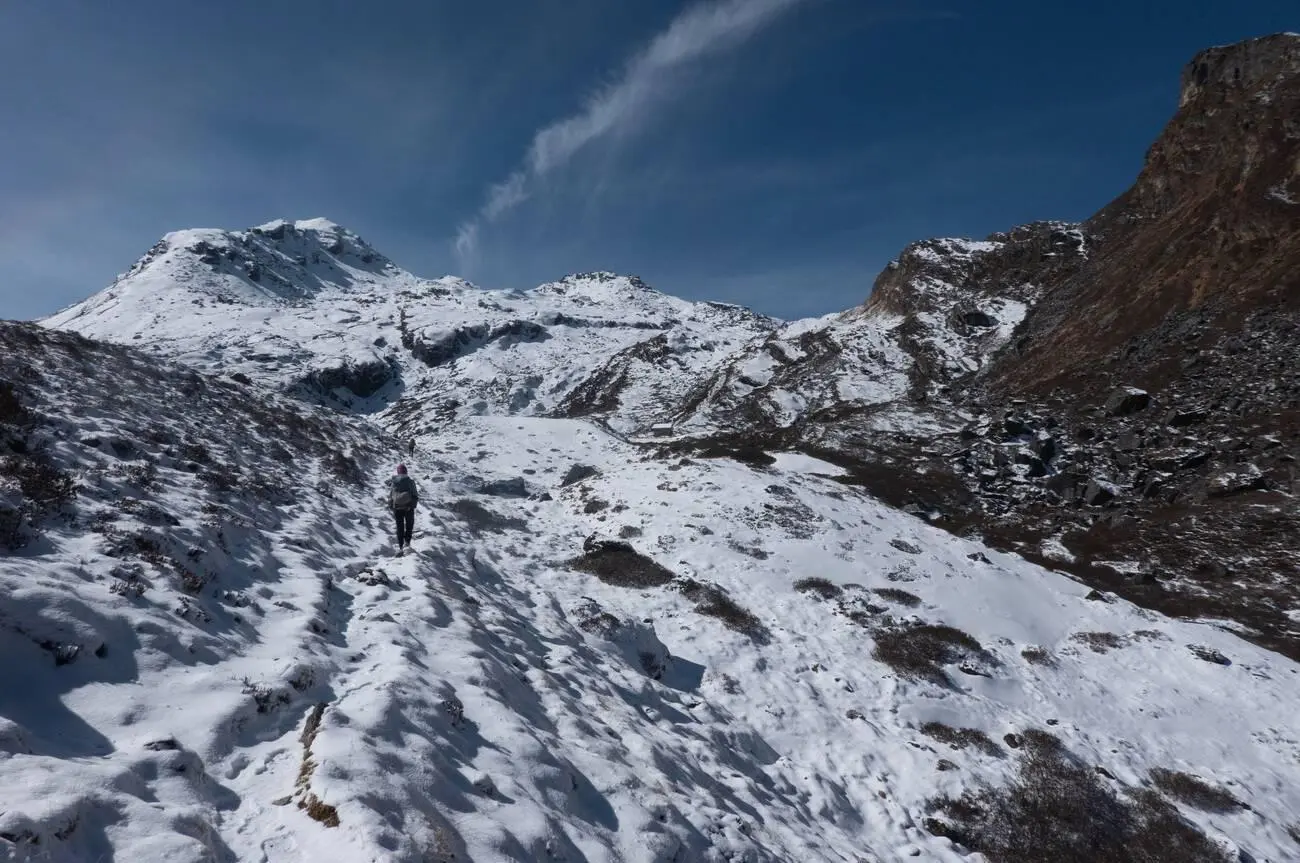
We start early to cross the high Sele-La Pass, one of the more strenuous parts of the trek. The trail climbs steeply through rocky terrain and high alpine pastures. After reaching the windy pass, we descend and camp near the ridge, surrounded by wild, untamed beauty.
A relatively easier day with a descent through pine and rhododendron forests. Ghunsa is a picturesque Tibetan village with colorful prayer flags, stone houses, and a welcoming atmosphere. This is an excellent place to rest and interact with the locals.
Today we gradually ascend through alpine meadows along the Ghunsa River, with stunning views of Jannu (7,710 m) towering ahead. The trail passes through yak pastures and forested slopes before reaching Khambachen, nestled beneath dramatic icefalls and glaciers.
We trek further into the high Himalayas with a sense of approaching the northern base of Kanchenjunga. The terrain becomes arid and more rugged. Lhonak sits on a wide glacial plain and provides mesmerizing views of Chang Himal and surrounding peaks.
We hike to Pang Pema, the official North Base Camp of Mount Kanchenjunga. The views here are surreal—Kanchenjunga’s massive north face dominates the skyline. After spending time at the base camp, we retrace our steps back to Lhonak for the night.
Retracing our steps, we descend back through Khambachen and continue to Ghunsa. Although it's a long walk, the downhill trail is more forgiving and offers a chance to enjoy the scenery from a different perspective.
We leave the alpine zone behind and descend into thick forests and terraced farmlands. The trail winds through waterfalls and small hamlets before arriving at Gyapla Phedi, where we camp or lodge near the riverside.
Today’s trek follows the Ghunsa Khola as it merges with the Tamur River. We cross several suspension bridges and descend steeply to Sekathum, a village located at the confluence of rivers and surrounded by lush vegetation.
The trail continues through cardamom plantations and mixed forests. We walk through Limbu and Rai villages with chances to interact with locals and learn about their lifestyles. Chirwa is a charming village with traditional houses and a friendly vibe.
Today’s path climbs gently through farmlands and forested hills. We stop near Phurumbu School, where the environment is peaceful and inspiring, especially for those interested in education and local development.
The final leg of the trek leads us back to Sukhetar. The trail retraces the early days of the journey, giving us time to reflect on the adventure. We celebrate with our crew and enjoy a well-earned rest after completing this incredible trek.
After breakfast, we drive to Ilam, the tea capital of Nepal. The drive offers scenic views of tea gardens, hills, and charming villages. We stay overnight in a comfortable lodge and enjoy a warm meal and hot tea in this quaint hill town.
We continue the drive to Bhadrapur, where we board a flight back to Kathmandu. Upon arrival, you’ll be transferred to your hotel. The rest of the day is free for souvenir shopping or simply relaxing after the long trek.
Our journey concludes as you are transferred to Tribhuvan International Airport for your onward flight. Hidden Path Treks & Expeditions bids you farewell with memories of a truly unforgettable Kanchenjunga Base Camp experience.
The Kanchenjunga Base Camp Trek is a remote and breathtaking journey to the base of the third-highest mountain in the world, Mt. Kanchenjunga (8,586m). This trek offers pristine Himalayan landscapes, rich biodiversity, and an intimate look at local cultures such as the Rai and Limbu communities. Unlike the more crowded Everest or Annapurna regions, this trail remains relatively untouched and wild, making it perfect for adventurers seeking solitude and raw natural beauty. Hidden Path Treks & Expeditions provides a professionally organized and safe experience that prioritizes sustainability and authentic local interaction.
This trek is considered challenging due to its length, altitude, and remote trails. Trekkers should be in excellent physical condition and ideally have previous multi-day trekking experience. You’ll ascend to altitudes over 5,100 meters, and the terrain can be steep, rocky, and sometimes snowy. That said, Hidden Path Treks & Expeditions arranges acclimatization stops and provides experienced guides and porters to support you throughout the journey.
The ideal trekking seasons are spring (March to May) and autumn (late September to November). These months offer the clearest skies, stable weather, and stunning views of the Himalayan peaks. While winter treks are possible, they come with increased risk of snow blockages and harsher weather. Monsoon season (June to early September) is not recommended due to heavy rainfall and slippery trails.
Accommodations range from basic tea houses in villages to camping in more remote areas. The tea houses provide simple rooms (usually twin-sharing), local meals, and a cozy communal dining area. Where tea houses aren’t available, Hidden Path Treks & Expeditions arranges full camping support, including tents, sleeping gear, and a cook team to prepare fresh meals. In Kathmandu, you’ll stay in a comfortable 3-star or boutique hotel before and after the trek.
Yes, Hidden Path Treks & Expeditions handles all necessary permits on your behalf. The Kanchenjunga region is a restricted area, so you’ll need:
Kanchenjunga Restricted Area Permit (RAP)
Kanchenjunga Conservation Area Permit (KCAP)
Trekkers’ Information Management System (TIMS) card
To obtain the RAP, a minimum of two trekkers is required in a group, and a registered Nepali guide must accompany the trek.
You’ll need layered clothing for changing weather conditions, a good-quality sleeping bag, sturdy trekking boots, a down jacket, gloves, and other cold-weather gear. We provide a complete packing list upon booking, and you can also rent or buy gear in Kathmandu. Our team helps inspect your gear during the pre-trek briefing to ensure you're fully prepared.
Yes, altitude sickness is a serious concern on this trek. However, our itinerary includes gradual ascent, acclimatization days, and experienced guides trained in acute mountain sickness (AMS) prevention and management. We carry a first-aid kit, oximeter, and emergency evacuation plans via helicopter if needed. Our guides closely monitor your condition and will adjust the pace or itinerary as required for your safety.
Meals on the trek include local Nepali dishes such as dal bhat, along with other staples like noodles, soups, rice, vegetables, and occasional meat (availability depends on altitude). Breakfast includes options like pancakes, porridge, toast, and eggs. Our camping staff can accommodate special dietary requests like vegetarian, vegan, or gluten-free meals with advance notice.
At Hidden Path Treks & Expeditions, we pride ourselves on offering personalized trekking experiences with local expertise, safety-first operations, and a strong focus on sustainable tourism. Our guides are not just professionals—they're passionate about their culture and the Himalayas. We believe in leaving a positive impact on local communities while ensuring our clients have a once-in-a-lifetime journey. With decades of experience in the Kanchenjunga region, we offer unmatched insight, reliability, and care.