Welcome to Nepal! Upon arrival at Tribhuvan International Airport in Kathmandu, a representative from Hidden Path Treks & Expeditions will greet you and transfer you to your hotel. After check-in, you'll have time to rest and recover from your journey. Later, you'll meet your guide for a trip briefing and final gear check. Overnight stay at a hotel in Kathmandu.
We begin our adventure with an early morning drive from Kathmandu to Besisahar by public bus, enjoying views of terraced fields, rivers, and rural landscapes. From Besisahar, we switch to a local jeep for a rugged, scenic ride through the Marsyangdi Valley to the mountain town of Chame. Chame is the district headquarters of Manang and offers the first real glimpse of high Himalayan scenery. Overnight at a lodge in Chame.
Today’s trek leads us through dense forests, suspension bridges, and beautiful views of Lamjung Himal and Annapurna II. We follow the Marsyangdi River, gradually ascending to the picturesque village of Pisang. Here, the terrain begins to shift toward the alpine, with sparse vegetation and wide valleys. Overnight at a lodge in Pisang.
We continue our climb toward Upper Pisang, a traditional Tibetan-style village that offers stunning panoramic views of Annapurna II, III, IV, and Gangapurna. After reaching Upper Pisang, we’ll spend the rest of the day exploring local monasteries and acclimatizing to the altitude. The atmosphere here is serene, surrounded by Himalayan peaks. Overnight at a lodge in Upper Pisang.
Leaving the village behind, we make our way to Pisang Peak Base Camp. The trail ascends through alpine pastures and rocky terrain. We gradually leave the tree line behind, reaching our tented base camp nestled below the peak. The crew will set up camp and prepare meals while you rest and adjust to the higher altitude. Overnight in tents at Base Camp.
Today we ascend to High Camp, where the air becomes thinner and conditions more challenging. The trail is steep and rugged, often snow-covered depending on the season. Upon reaching High Camp, our climbing guide will check gear and prepare for the summit push. You’ll have time to hydrate, rest, and mentally prepare for tomorrow’s climb. Overnight in tents at High Camp.
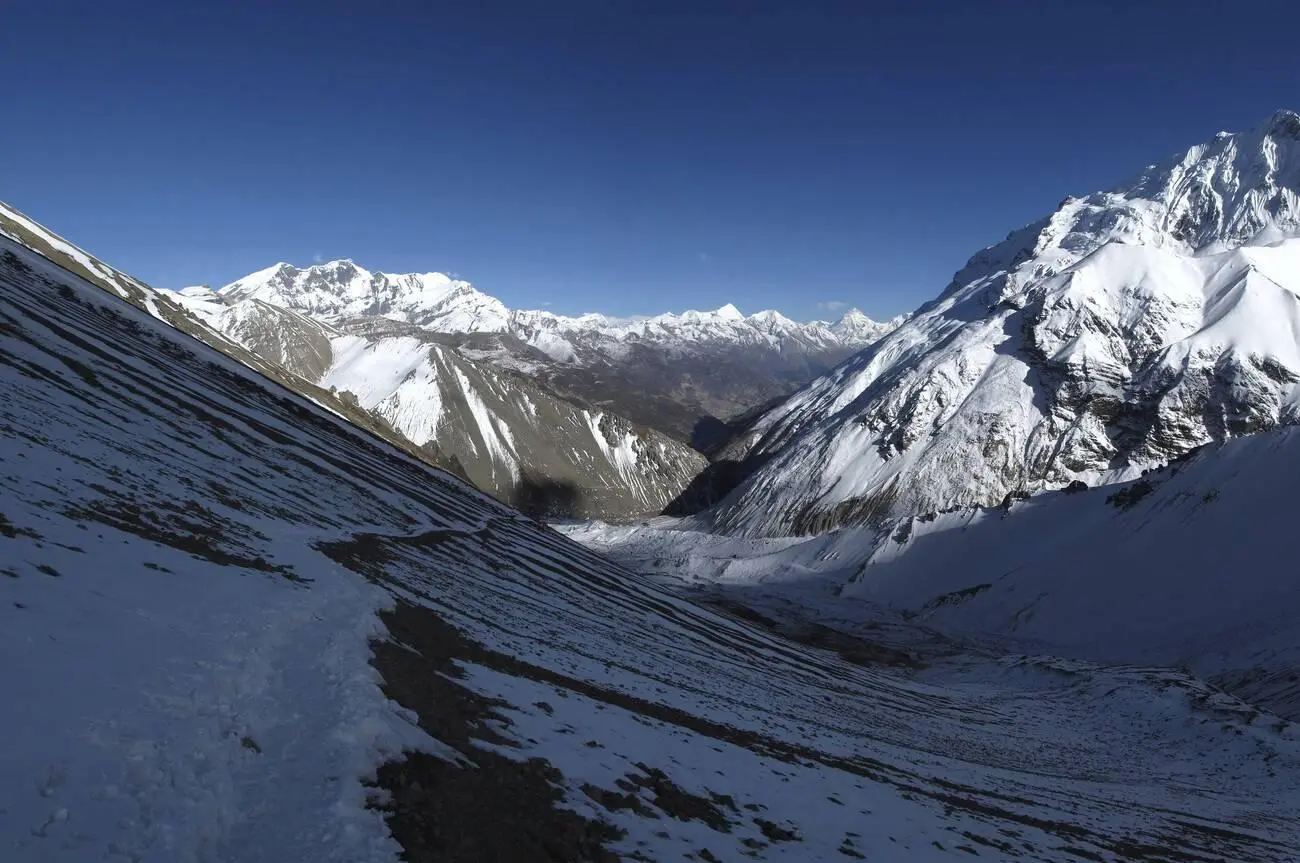
Summit day begins early, usually around 2–3 AM. With headlamps and crampons, we ascend gradually over glaciers and snowy ridges. After reaching the summit of Pisang Peak (6,091m), you’ll be rewarded with breathtaking panoramic views of the Annapurna and Manaslu ranges. After photos and celebration, we descend carefully back to High Camp, then continue down to Upper Pisang for a well-deserved rest. Overnight at a lodge.
After the successful summit, we join the main Annapurna Circuit trail and trek to the beautiful Himalayan village of Manang. The trail passes through pine forests, mani walls, and monasteries. Manang is a hub for trekkers and climbers, offering internet cafes, bakeries, and medical facilities. Overnight at a lodge in Manang.
To support acclimatization, we take a rest day in Manang. Optional hikes to Gangapurna Lake or the viewpoint above the village help adjust to the altitude. You can also visit the Himalayan Rescue Association for a short altitude lecture or enjoy the cultural richness of this Tibetan-influenced town. Overnight at the same lodge.
The trail now begins to climb steeply as we make our way toward the high Himalayas. Trekking past yak pastures and dry alpine terrain, we reach Chauri Lattar, a small teahouse settlement. The scenery here becomes more barren but striking, with sweeping views of the surrounding peaks. Overnight at a lodge.
A short but important day, today we trek to Thorong Phedi, the base camp of the Thorong La Pass. We take it slow to preserve energy for the challenging pass crossing tomorrow. Upon arrival, we rest and prepare for an early morning departure. Overnight at a lodge in Thorong Phedi.
We start before sunrise for the climb to the famous Thorong La Pass. The high-altitude pass rewards us with stunning views of the Dhaulagiri and Annapurna ranges. After a celebratory photo at the top, we begin a long descent to the sacred pilgrimage site of Muktinath, known for its eternal flame and 108 holy taps. Overnight at a lodge in Muktinath.
The trek today descends through the arid Mustang region to Jomsom, a windy town and the administrative headquarters of the Mustang district. We pass through the village of Kagbeni, where Tibetan culture remains strong. After reaching Jomsom, we rest and enjoy the comfort of lower altitude. Overnight at a lodge in Jomsom.
We take a scenic early morning flight from Jomsom to Pokhara, flying between the peaks of Annapurna and Dhaulagiri. Once in Pokhara, the rest of the day is free to relax by the lakeside, enjoy cafes, or visit local attractions like the Peace Pagoda or Davis Falls. Overnight at a hotel in Pokhara.
After breakfast, we drive back to Kathmandu via a comfortable tourist bus. The drive follows the Trishuli River, offering glimpses of rural life and landscapes. Upon arrival in Kathmandu, you can enjoy your final evening with a farewell dinner or some last-minute shopping. Overnight at a hotel in Kathmandu.
Your unforgettable Pisang Peak expedition with Hidden Path Treks & Expeditions comes to an end. A representative will transfer you to the airport for your onward journey. We hope you leave with cherished memories and a deep connection to the Himalayas.
Pisang Peak, standing at 6,091 meters (19,978 feet), is one of the most popular trekking peaks in Nepal’s Annapurna region. This climb offers trekkers an exciting blend of trekking and moderate mountaineering, providing spectacular views of the Annapurna and Manaslu ranges. Pisang Peak is ideal for climbers looking for a manageable alpine climb with stunning panoramic vistas, including sights of Annapurna II, Lamjung Himal, and Pisang Peak itself. Hidden Path Treks & Expeditions offers a well-structured 16-day itinerary combining acclimatization, cultural exposure, and technical climbing experiences.
Pisang Peak is classified as a moderate trekking peak, requiring basic mountaineering skills such as using crampons, ice axes, and fixed ropes. It is suitable for physically fit trekkers with some prior high-altitude trekking experience, but it is also a great introduction for those wanting to try alpine climbing under expert guidance. Hidden Path Treks & Expeditions provides comprehensive climbing training at base camp to ensure safety and confidence for all participants.
The trek starts with a scenic flight to Pokhara, followed by a drive to Chame or Besisahar, and then trekking through the spectacular Annapurna region, passing villages like Ghorepani, Manang, and Pisang village. Along the way, trekkers enjoy breathtaking views of the Annapurna massif and the cultural richness of the Gurung and Manangi communities. After reaching Pisang Base Camp, climbers prepare and train for the summit attempt. The final days focus on climbing Pisang Peak, followed by a descent and return trek to Pokhara.
Throughout the trekking portion, accommodation is arranged in local teahouses and lodges, which offer basic but comfortable rooms with hot showers available at certain stops. Meals include a variety of local Nepali dishes like dal bhat, momo, noodles, and simple western options such as pasta and soups. During the climbing days, accommodations shift to tented camps equipped with essential facilities. Hidden Path Treks & Expeditions ensures that food is nutritious, hygienic, and sufficient to support the energy needs of climbers.
Yes, climbing Pisang Peak requires several permits including the Annapurna Conservation Area Permit (ACAP), Trekking Information Management System (TIMS) card, and a specific Pisang Peak Climbing Permit issued by the Nepal Mountaineering Association. Hidden Path Treks & Expeditions includes all necessary permits and paperwork in the trek package for a hassle-free experience.
Altitude sickness can occur as the trek ascends above 4,000 meters, especially during the summit push. Hidden Path Treks & Expeditions emphasizes gradual ascent, proper acclimatization days, and monitoring of climbers for any signs of altitude sickness. Their guides are trained in first aid and altitude sickness management to ensure the health and safety of every client.
The package typically covers airport transfers, domestic flights, ground transportation, accommodation during trek and climb, meals, permits, climbing guide and porter services, climbing equipment rental, and government taxes. Additional costs include personal gear, tips, travel insurance, and personal expenses such as internet or hot showers.
The prime seasons for Pisang Peak climbing are spring (March to May) and autumn (September to November). These periods provide stable weather, clear skies, and ideal snow conditions for climbing. The monsoon season (June to August) and winter months (December to February) are less favorable due to rain and cold, respectively.
Essential gear includes mountaineering boots, crampons, ice axe, climbing harness, helmet, down jacket, insulated gloves, and layered clothing. Hidden Path Treks & Expeditions provides a detailed gear list and can assist with renting or purchasing mountaineering equipment in Kathmandu prior to the trek.
Hidden Path Treks & Expeditions offers expert guidance, personalized service, and a commitment to safety and sustainability. Their experienced climbing guides, local knowledge, and thorough planning ensure you have an unforgettable and secure climbing experience. With a focus on cultural respect and environmental care, they provide a meaningful connection to Nepal’s mountains and communities, making your Pisang Peak climb truly special.