Your journey begins in Kathmandu, the vibrant capital city of Nepal. After breakfast, you’ll embark on a scenic drive northward toward the Nepal-Tibet border. This drive takes you through picturesque mountain roads, terraced hillsides, charming villages, and winding river valleys. The route follows the Trishuli River for much of the way, offering views of lush green landscapes and glimpses of rural Nepali life.
As you reach the border town of Rasuwagadhi and cross into Tibet at the Kerung Border, you’ll go through immigration formalities. Kerung (also spelled Kyirong) is located at an altitude of about 2,700 meters and is an important gateway into Tibet. Once across the border, you’ll begin to experience the unique blend of Tibetan culture, language, and landscape. Overnight in Kerung, where you’ll have a chance to acclimatize and rest for the journey ahead.
This day offers a cultural and scenic feast as you travel from Shigatse to Lhasa via the historic town of Gyantse. On the way to Gyantse, you'll traverse rolling hills and valleys surrounded by vast barley fields and occasional yak herds. Once in Gyantse, you’ll visit the Kumbum Stupa and the Pelkor Monastery—two of the region’s most revered religious structures, showcasing exquisite Tibetan art and architecture.
Continuing onward to Lhasa, the road winds through dramatic mountain landscapes and across high passes such as Karo La (5,010m) and Khamba La (4,794m), with striking views of turquoise Yamdrok Lake below. As you reach Lhasa, nestled in a valley at 3,650 meters, you’ll begin to feel the spiritual aura of Tibet’s holiest city. The city exudes peace and mysticism, with golden roofs and fluttering prayer flags set against the mighty Himalayas.
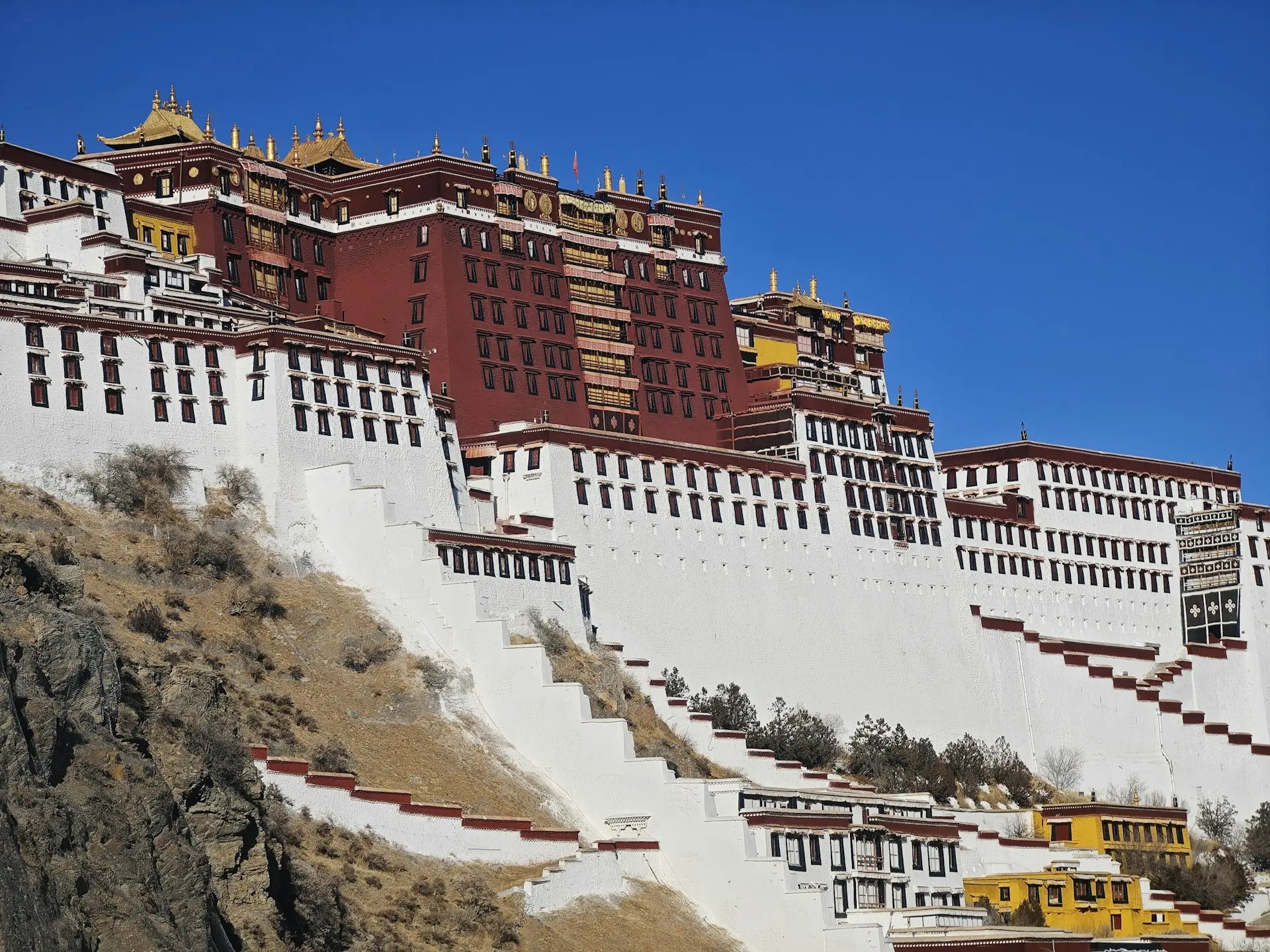
Today is dedicated to exploring the spiritual and historical treasures of Lhasa. The highlight of the day is a visit to the majestic Potala Palace, the former winter residence of the Dalai Lama. This architectural marvel towers over the city and contains hundreds of rooms filled with relics, chapels, and sacred Buddhist texts. The views from the top offer a magnificent panorama of the city and surrounding mountains.
In the afternoon, you’ll explore Jokhang Temple, considered the most sacred temple in Tibet. Pilgrims from all over Tibet make their way here, often prostrating themselves along the streets. Surrounding the temple is Barkhor Street, a bustling kora (ritual circumnavigation path) lined with stalls selling prayer wheels, thangkas, and local crafts. Walking through Barkhor gives a deep insight into local Tibetan life, devotion, and tradition.
Today you’ll begin your return journey westward across the Tibetan plateau, retracing parts of the route with new scenic vistas and spiritual encounters. The long drive takes you back toward Xegar or Tingri, giving you another opportunity to appreciate the grandeur of the high-altitude landscape, including views of glaciers, alpine lakes, and vast, open plains.
En route, short stops at small villages and monasteries allow you to stretch and absorb more of the authentic Tibetan lifestyle. Xegar or Tingri serves as a restful overnight stop, positioned near the gateway to the Everest region. Depending on timing and road conditions, you may also get a glimpse of Mount Everest from the distant viewpoint.
Leaving the highlands behind, you begin your descent toward the lush valleys of the Kyirung region. This route offers a striking transition from barren alpine plateaus to green forested hills and rushing rivers. Kyirung, also known as Gyirong, sits at a lower altitude, offering a milder climate and a peaceful atmosphere surrounded by mountains.
Kyirung is historically significant as a trade route and spiritual passage between Nepal and Tibet. You can explore the local Tibetan settlements and monasteries here while enjoying a more relaxed pace and environment. This area serves as the last stop in Tibet before re-entering Nepal the following day.
After breakfast, you’ll complete the border formalities and cross back into Nepal at Rasuwagadhi. From there, you’ll be picked up and driven back to Kathmandu. The drive winds through scenic hills, rivers, and terraced fields, offering a final look at the diverse Himalayan geography.
Upon arrival in Kathmandu, you’ll have time to relax, shop for souvenirs, or explore the city one last time. Whether you’re heading home or continuing your journey elsewhere, this Tibet Overland Tour leaves you with unforgettable memories of sacred landscapes, ancient cultures, and the spiritual heart of the Himalayas.
This epic overland journey offers an adventurous route across the Himalayas from Kathmandu, Nepal, to the spiritual heart of Lhasa, Tibet, and back. On Day 1, the journey begins with a scenic drive from Kathmandu to the Kerung Border, passing through beautiful Nepali countryside. After immigration formalities, you enter Tibet. Day 2 takes you from Kerung to Tingri and on to Shigatse (390 km), crossing dramatic highland terrain. On Day 3, you drive from Shigatse to Lhasa via Gyantse, passing sacred lakes and the Karo-La Glacier. Days 4 and 5 are dedicated to exploring Lhasa’s sacred landmarks such as the Potala Palace, Jokhang Temple, Sera Monastery, and the Barkhor Market. On Day 6, you begin the return journey, traveling back to Xegar or Tingri, with stunning views of Mount Everest and Himalayan ranges. Day 7 brings you back to Kyirung, and finally, on Day 8, you re-enter Nepal and drive back to Kathmandu, concluding the unforgettable trans-Himalayan adventure.
Traveling overland to Tibet via the Kerung (Kyirong) border is a popular and safe route. Hidden Path Treks & Expeditions manages all permits, documentation, and border coordination to ensure a smooth entry. This border is less crowded than others and offers a gradual ascent into Tibet, which helps with acclimatization. Our experienced staff assist with both Nepali and Chinese immigration procedures.
The tour package includes all required Tibet travel permits, accommodations (based on twin sharing), daily breakfast, private ground transportation, an English-speaking Tibetan guide, sightseeing entrance fees, border transfers, and full assistance throughout the trip. Accommodation is in comfortable guesthouses and hotels along the route. Meals (lunch/dinner) and Nepal–China visa processing are not typically included in the base cost but can be arranged upon request.
You will stay in standard hotels or guesthouses, ranging from simple lodges in Tingri and Kerung to more comfortable 3-star hotels in Lhasa and Shigatse. In remote areas, the facilities are basic but clean and adequate. Lhasa offers modern accommodations with Wi-Fi and hot water, while higher altitudes might have limited amenities.
The overland route reaches high altitudes, especially between Kerung, Tingri, and Lhasa (3,500m to 5,000m), so some risk of Acute Mountain Sickness (AMS) exists. We recommend that travelers be in reasonably good health and consult their physician before travel. The itinerary is designed to allow gradual acclimatization, and your guide will monitor your health. Staying hydrated, eating light, and avoiding alcohol can help ease symptoms.
To enter Tibet, you need a Chinese Group Visa (issued from the Chinese Embassy in Kathmandu) and a Tibet Travel Permit, both of which are arranged by Hidden Path Treks & Expeditions. You must be in Kathmandu at least 3 full working days before departure to process the visa. We collect your passport and photo, handle the application, and return your documents before departure.
The Tibet Overland Tour is rich in cultural and natural highlights. You’ll visit the Potala Palace, Jokhang Temple, Sera and Drepung Monasteries, and the traditional Barkhor Market in Lhasa. The road journey itself is filled with dramatic Himalayan views, ancient towns like Gyantse, shimmering lakes like Yamdrok, and a close-up look at the unique plateau landscape and Tibetan lifestyle. The route also offers potential views of Mount Everest on clear days from passes near Tingri.
The best time for the Tibet Overland Tour is from April to October, when the weather is generally dry and the roads are passable. Summer (June–August) brings milder temperatures but occasional rain, while spring and autumn offer the clearest mountain views. Winter is colder and less popular due to harsh conditions at high altitudes.
Pack layered clothing suitable for cold, dry climates—especially at night. Include a warm jacket, gloves, sunglasses, sunscreen, lip balm, a hat, personal medications, comfortable walking shoes, and toiletries. Electricity can be limited in remote towns, so a power bank and headlamp are useful. Hidden Path Treks & Expeditions will provide a full packing checklist upon booking.
With years of experience in Himalayan travel logistics, Hidden Path Treks & Expeditions offers reliable, well-coordinated Tibet tours with a focus on safety, comfort, and cultural immersion. We handle all permits, border formalities, and transportation, and provide trusted Tibetan guides to ensure your journey is smooth and memorable. Our local support in both Nepal and Tibet ensures 24/7 assistance throughout your adventure.