Welcome to Nepal! Upon arrival at Tribhuvan International Airport in Kathmandu, a representative from Hidden Path Treks & Expeditions will meet you and transfer you to your hotel. After check-in and some rest, you’ll have a briefing about the upcoming trek. In the evening, explore Thamel or enjoy a welcome dinner featuring traditional Nepali cuisine.
Today is reserved for obtaining the Kanchenjunga Conservation Area Permit (KCAP) and the Restricted Area Permit. If you're interested, we can arrange a sightseeing tour around Kathmandu’s UNESCO-listed heritage sites like Swayambhunath (Monkey Temple), Boudhanath, and Durbar Square. It's also a good day for gear checks and last-minute purchases.
An early morning domestic flight takes you to Bhadrapur in eastern Nepal. From there, you’ll be driven through the lush hills and tea plantations of Ilam, a picturesque town known for its cool climate and scenic beauty. You’ll spend the night in Ilam, enjoying local hospitality and the peaceful surroundings.
After breakfast, the journey continues with a drive north to Taplejung, the starting point of your trek. The road winds through beautiful mid-hill landscapes dotted with cardamom farms, rivers, and traditional villages. Once in Taplejung, you'll prepare for the trekking days ahead and spend the night in a local guesthouse.
The first day of trekking begins with a descent through terraced fields and lush sub-tropical forests. The trail follows the Tamor River, passing through Limbu and Rai villages. After several suspension bridges and gentle ups and downs, you’ll reach Chirwa, a small riverside village surrounded by hills.
Today’s trail continues along the Tamor River, entering the Kanchenjunga Conservation Area. You’ll walk through dense forests and cross multiple suspension bridges, with the landscape becoming wilder and more remote. After a steady climb through mixed terrain, you’ll arrive at Lelep, a peaceful village with a mix of traditional and Tibetan-style homes.
A more demanding day awaits as the trail climbs through steep gorges, waterfalls, and thick bamboo forests. The narrow path occasionally hugs the cliffs above the river, offering thrilling views. After a long and steady ascent, you reach Amjilosa, a small hamlet inhabited by Tibetan-origin families.
Today’s walk takes you through rhododendron forests and alpine terrain, with glimpses of snowy peaks in the distance. After some river crossings and forested stretches, you reach the small settlement of Gyabla. The village is perched on a hillside, offering a calm, secluded atmosphere for rest.
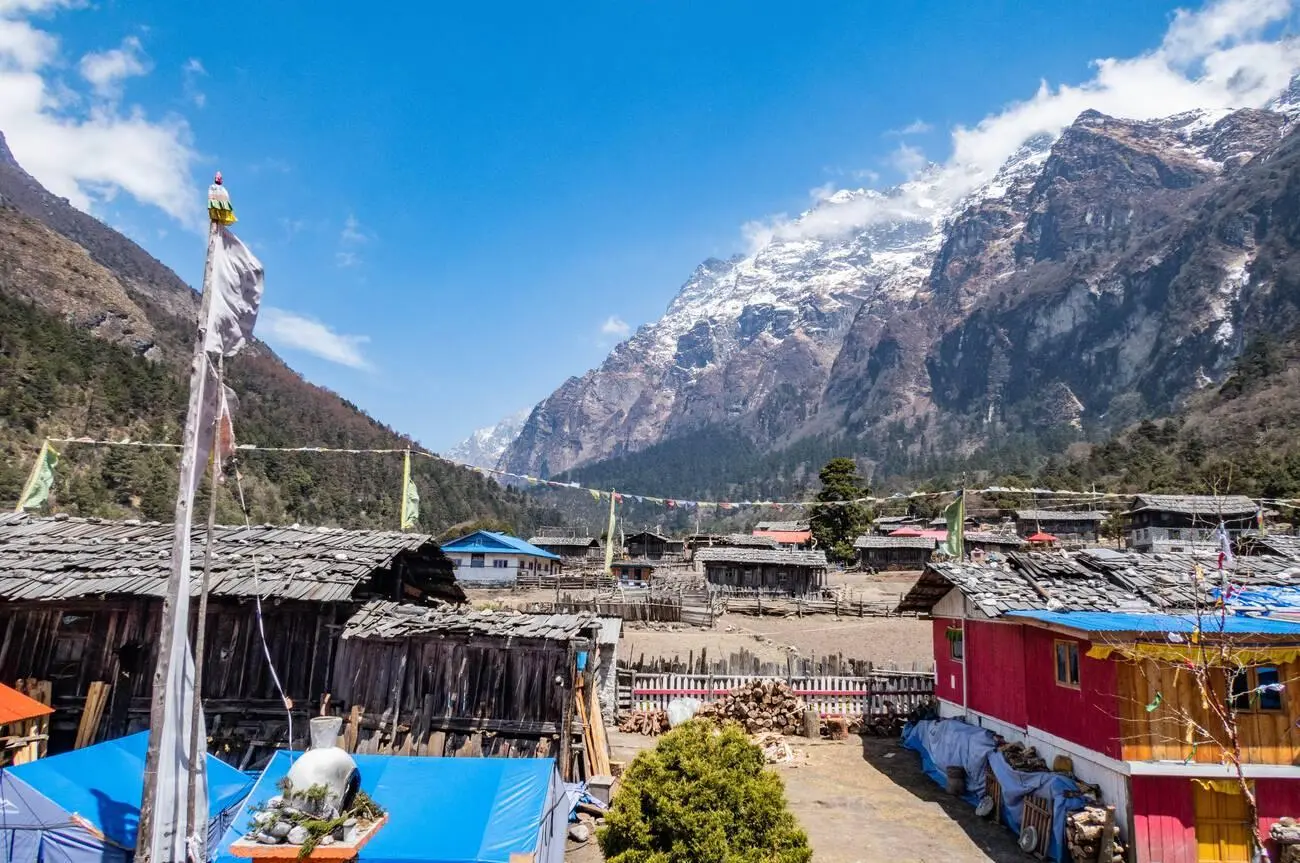
The trail gradually ascends through fir and pine forests. After crossing a few streams and walking along yak pastures, you arrive in Ghunsa, the largest village in the region. It’s a traditional Tibetan settlement with stone houses, a monastery, and friendly locals. This will be a key acclimatization point in your journey.
A rest and acclimatization day in Ghunsa is essential. You can take a short hike to the nearby ridge or monastery, which helps with altitude adaptation while offering fantastic views of the surrounding mountains. Enjoy the warmth of Ghunsa's lodges and take the time to explore its cultural sites.
Today’s trail ascends alongside the Ghunsa River through alpine meadows and glacial moraine. As the altitude increases, the vegetation becomes sparse. You’ll be rewarded with magnificent views of Jannu (7,710m) and other peaks as you arrive in the remote settlement of Kambachen, surrounded by towering mountains.
Take another day to acclimatize at higher altitudes. Optional hikes to nearby ridges or glacial viewpoints offer excellent mountain vistas and help your body adjust. You can relax in the village, observe yak herders, or chat with fellow trekkers.
The trail follows a rugged and remote route, traversing glacial debris and high-altitude pastures. After a few hours of careful walking, you’ll arrive in Lhonak, a windswept plateau with panoramic views of the Himalayas. The terrain is stark but incredibly scenic.
A challenging but unforgettable day. You trek to Pang Pema, the North Base Camp of Kanchenjunga, for close-up views of the towering north face of the world’s third-highest peak. After soaking in the views and capturing the moment, you return to Lhonak for a well-earned rest.
Retracing your steps, you make a long but mostly downhill journey back to Ghunsa. It’s a time to enjoy familiar landscapes from a new perspective and reflect on your journey to the north base camp.
The trail climbs steeply through forests of juniper and rhododendron before reaching the high camp at Sele Le, a remote ridge-top site. This is one of the most scenic spots on the trek, offering stunning sunset views of distant snowcapped peaks.
Today, you’ll cross several high passes including Sinion La and Mirgin La, with jaw-dropping views of Everest, Makalu, and the entire Kanchenjunga range. After a long descent, you reach Cheram, a tranquil settlement nestled near the Yalung Glacier.
From Cheram, you hike toward the South Base Camp viewpoint at Oktang, where you get a close-up view of the massive Yalung Glacier and the majestic south face of Kanchenjunga. After spending time at the viewpoint, return to Cheram for a restful evening.
Begin a long descent through ancient rhododendron forests and rugged hillsides. The trail offers a serene atmosphere, with cascading waterfalls and rivers as your backdrop. Arrive at Torongding, a quiet forest camp perfect for a peaceful night.
A challenging day of ups and downs as you make your way toward Yamphuding, the first large village since Ghunsa. The culture begins to shift as you move into lower regions inhabited by the Rai and Limbu communities.
Continue trekking through lush hills, crossing several ridges and small villages. The trail winds through cardamom farms and rice terraces before reaching Khebang, a picturesque hill village where you can relax after your long descent from the mountains.
The final walking day includes a short trek to reach the road, where a vehicle will be waiting. From here, you begin your return journey through the green valleys and terraced fields of eastern Nepal, arriving at Khamdime for the night.
A full-day scenic drive brings you back to Bhadrapur, passing tea estates, hill towns, and subtropical landscapes. Once in Bhadrapur, you can enjoy a hot shower and a celebratory dinner to mark the completion of your trek.
Today, Hidden Path Treks & Expeditions will arrange your transfer to Tribhuvan International Airport for your onward flight. We hope your Kanchenjunga Circuit Trek has been a memorable and life-changing experience. Safe travels and we look forward to welcoming you back to Nepal!
The Kanchenjunga Circuit Trek is one of Nepal’s most remote and rewarding long-distance treks. Unlike other popular trails, this circuit takes you deep into the wild east of Nepal, visiting both the North Base Camp (Pangpema) and South Base Camp (Oktang) of Mt. Kanchenjunga, the world’s third-highest mountain at 8,586 meters. The route showcases pristine alpine scenery, glacial rivers, dense rhododendron forests, and dramatic mountain vistas without the crowds of Everest or Annapurna. Hidden Path Treks & Expeditions ensures a seamless and authentic adventure into this rarely visited region, offering a mix of rich culture, biodiversity, and true wilderness.
This trek is physically demanding and suitable for experienced trekkers. Expect daily hikes of 5–8 hours, with significant altitude gain (up to 5,160m at Pangpema). Trails are often steep, rocky, and sometimes covered in snow. Remote conditions also mean limited facilities, requiring strong physical and mental endurance. Hidden Path Treks & Expeditions supports you with a seasoned team, porters, and acclimatization strategies to make the journey safe and enjoyable.
The best seasons are:
Spring (March to May) – Clear skies, blooming rhododendrons, stable temperatures.
Autumn (late September to November) – Crisp mountain views, dry weather, pleasant daytime hiking.
Winter treks (Dec–Feb) are possible but involve snow, freezing temperatures, and potential trail closures. Monsoon (June–Sept) brings landslides, leeches, and limited visibility, so it is not recommended.
Since the Kanchenjunga region is a restricted area, you'll need the following permits:
Restricted Area Permit (RAP) – Issued for a minimum group of 2 trekkers, with a registered guide.
Kanchenjunga Conservation Area Permit (KCAP)
TIMS Card (Trekkers’ Information Management System)
Hidden Path Treks & Expeditions handles all permits, logistics, and local government registration on your behalf.
Accommodation along the Kanchenjunga Circuit is a mix of basic tea houses and camping in more remote stretches. Tea houses typically offer twin-sharing rooms with simple beds and shared toilets. In areas without tea houses (especially between North and South Base Camp), we organize fully supported camping, including tents, sleeping gear, and a cooking team.
Meals include local staples like dal bhat, noodles, potatoes, eggs, and soups. Hidden Path Treks ensures nutritious and hygienic meals, with the ability to accommodate dietary needs (vegetarian, vegan, gluten-free) upon request.
We’ll provide a comprehensive gear checklist upon booking. Essentials include:
Warm, layered clothing (base layer to down jacket)
Waterproof jacket and pants
High-quality trekking boots
Gloves, hat, and sunglasses
Sleeping bag (4-season)
Headlamp and personal first aid kit
Hidden Path Treks supplies tents, sleeping mats, and kitchen gear during camping nights. You can also rent or buy gear in Kathmandu if needed.
Altitude sickness is a serious risk on the Kanchenjunga Circuit due to the height and remote nature of the trail. Our itineraries include gradual elevation gain, acclimatization rest days, and constant monitoring by our experienced guides. We carry an oximeter, first aid kits, and emergency contacts. In severe cases, we can arrange helicopter evacuation. Prevention is prioritized through proper hydration, nutrition, pacing, and education.
In lower villages, you’ll find limited mobile network coverage and occasional access to solar charging for devices (often for a small fee). However, as you climb higher or move between base camps, connectivity is extremely limited or unavailable. We recommend bringing extra power banks and using the trek as an opportunity to disconnect and immerse yourself in nature.
Hidden Path Treks & Expeditions specializes in off-the-beaten-path adventures like Kanchenjunga. Our team combines local knowledge, mountain safety expertise, and a commitment to responsible tourism. We offer small-group and custom treks with experienced guides, reliable logistics, and a passion for connecting travelers with the authentic heart of the Himalayas. Whether you're a seasoned mountaineer or a determined trekker looking for a remote challenge, we provide a safe, meaningful, and unforgettable experience.