Upon your arrival at Tribhuvan International Airport in Kathmandu, you’ll be warmly welcomed by our team from Hidden Path Treks & Expeditions. After a brief meet-and-greet, you’ll be transferred to your hotel in the heart of Kathmandu. Take some time to relax and recover from your journey. In the evening, attend a pre-trek briefing where you’ll meet your guide and fellow trekkers. Overnight in Kathmandu.
Today is a mix of cultural immersion and final preparation. In the morning, your guide will help with gear checks and permit verification. Afterward, enjoy a guided heritage tour of three significant temples in the Kathmandu Valley: the sacred Hindu temple of Pashupatinath, the serene Buddhist stupa of Boudhanath, and the iconic hilltop shrine of Swayambhunath (Monkey Temple). This tour offers insights into Nepal’s spiritual landscape before heading into the Himalayas. Overnight in Kathmandu.
Catch a morning flight to Bhadrapur in eastern Nepal. Upon landing, begin a scenic drive to Ilam, a hill town known for its rolling tea gardens and cool climate. The journey introduces you to the lush beauty of eastern Nepal. Once in Ilam, explore the tea estates or simply rest in this peaceful setting. Overnight in Ilam.
Today’s drive takes you deeper into the eastern hills toward Taplejung, the starting point of your trek. The winding roads provide glimpses of terraced fields, traditional villages, and distant Himalayan peaks. Arriving in Taplejung, you’ll begin to feel the remoteness and tranquility of the Kanchenjunga region. Overnight in Taplejung.
The trekking adventure begins! Departing Taplejung, the trail ascends through terraced hills and mixed forests. Lali Kharka is a small village surrounded by farmlands and offers your first taste of rural mountain life. This gentle start helps your body adjust for the days ahead. Overnight in a local teahouse.
After breakfast, begin a scenic trek along undulating trails with views of lush green hills and distant snow-capped peaks. Pass through small settlements, crossing ridges and streams, before reaching the charming village of Khesewa. This is a great place to interact with locals and learn about Limbu culture. Overnight in Khesewa.
Today’s trail is both ascending and descending, weaving through forested paths and cultivated hillsides. You’ll encounter cascading waterfalls and traditional houses nestled into the landscape. Pumphe Danda offers stunning ridge-top views of the valleys below. Overnight in a mountain lodge or teahouse.
A longer day of trekking brings you to Yamphuding, one of the largest settlements in this region. You’ll cross suspension bridges and walk through thick forests with bamboo groves and rhododendron. Yamphuding is an important cultural hub with a mixed population of Sherpa, Limbu, and Rai people. Overnight in Yamphuding.
Leaving the last major village, the trail becomes quieter and wilder. The path ascends steadily through remote forests with fewer settlements. You’ll feel the wilderness deepen as you reach Torongding, a quiet stop surrounded by dense woodland and the sounds of the river below. Overnight in basic teahouse accommodation.
This is a demanding but rewarding day. The trail climbs steeply through a spectacular landscape of mossy forests and alpine scenery. As you ascend past the treeline, the peaks of the Kanchenjunga range become visible. Cheram, a beautiful alpine camp, marks your arrival into the high Himalayas. Rest well and acclimatize. Overnight in Cheram.
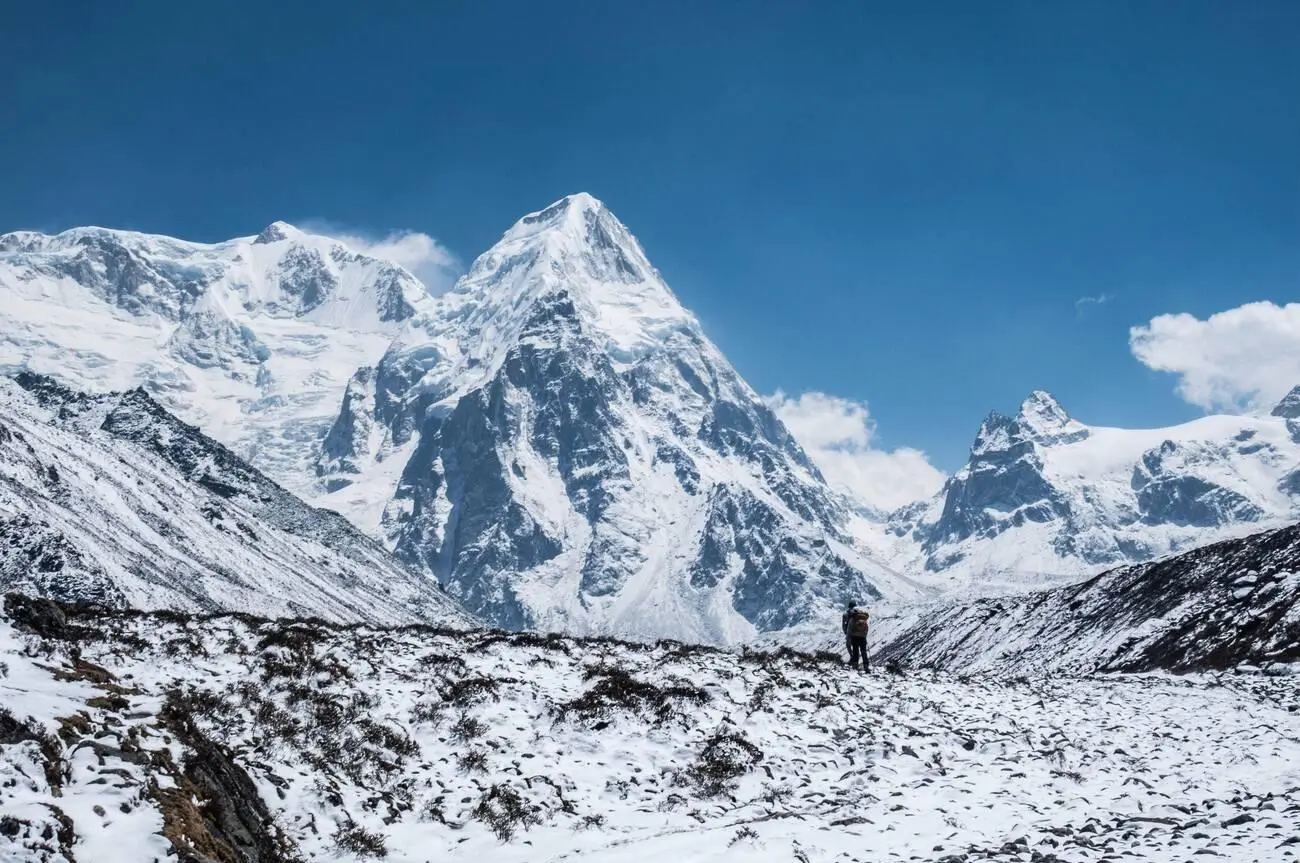
Today is the highlight of the trek. Start early and ascend gradually through yak pastures and glacial valleys. Reaching Ramche, drop your bags and make the hike to Kanchenjunga South Base Camp (Yalung Glacier). The views of the towering south face of Mt. Kanchenjunga and surrounding peaks are absolutely majestic. After spending time at base camp, return to Ramche for the night.
Continue descending further back into forested hills and traditional farmlands. As you return to Yamphuding, you’ll appreciate the contrast between the high Himalayas and these culturally rich villages. Enjoy your evening here with warm hospitality. Overnight in Yamphuding.
Today’s journey includes the final leg of your trek, ending at Ranipul, where the trail meets the road. From here, board a vehicle and drive to Phidim, a bustling town surrounded by tea plantations. Celebrate the end of your trekking adventure with a well-earned rest. Overnight in Phidim.
After breakfast, enjoy a scenic drive from Phidim to Bhadrapur. The landscapes shift from hills to plains as you descend through eastern Nepal. In the afternoon, board your flight back to Kathmandu. Once in the city, transfer to your hotel and enjoy your final evening. Optional: farewell dinner with Hidden Path Treks & Expeditions. Overnight in Kathmandu.
Your journey comes to a close today. After breakfast, our team will escort you to the airport for your flight home. Thank you for trekking with Hidden Path Treks & Expeditions. We hope the memories of the Kanchenjunga South Base Camp will stay with you forever. Safe travels!
The Kanchenjunga South Base Camp Trek is a remote, immersive journey into the southern face of Mt. Kanchenjunga, Nepal’s eastern Himalayan gem. Unlike the northern route, the south side takes you through wild, less-traveled landscapes, dense forests, and traditional Limbu and Rai villages. The trek culminates at Oktang (approx. 4,800 meters), a spectacular base camp site located near the impressive Yalung Glacier. This trek offers panoramic views of the Kanchenjunga massif, towering icefalls, and a genuine wilderness experience.
This trek is moderately to highly challenging. The trail includes steep ascents, uneven terrain, and high altitude (up to nearly 4,800m). Trekkers should have good fitness and prior trekking experience is recommended. The trail is less frequented, which means fewer amenities and more rugged conditions. Our experienced guides provide support, ensuring a safe and rewarding trek.
The best seasons are:
Spring (March to May): Rhododendron forests bloom with vibrant colors, and the weather is mild.
Autumn (September to November): Clear skies, pleasant temperatures, and excellent mountain views.
Monsoon season (June to September) is avoided due to heavy rains and slippery trails, while winter months bring cold and snow, making trekking more difficult.
Because the region is protected and restricted, you’ll need:
Kanchenjunga Restricted Area Permit (RAP)
Kanchenjunga Conservation Area Permit (KCAP)
TIMS Card
Hidden Path Treks & Expeditions will arrange all permits and documentation on your behalf.
Tea houses and lodges along the trail provide basic but comfortable rooms and local meals. In some stretches, accommodation may be very rustic, and camping might be necessary. Meals typically include dal bhat, noodles, soups, vegetables, and occasional meat dishes, with options for vegetarians and other dietary preferences available upon request.
Altitude sickness is a concern above 3,000 meters, so the itinerary is designed with gradual ascents and acclimatization stops. Our guides are trained to detect and manage altitude sickness symptoms and carry emergency oxygen and first aid kits. Evacuation procedures via helicopter are in place if needed. Proper hydration, nutrition, and rest are emphasized.
Essential gear includes warm clothing layers, waterproof outerwear, sturdy boots, a sleeping bag suitable for sub-zero temperatures, gloves, hat, sunglasses, and a headlamp. Hidden Path Treks & Expeditions provides a full packing list and assistance with gear rental or purchase in Kathmandu.
Connectivity is limited in this remote region. Some lower villages offer mobile network coverage and charging facilities, but once you reach higher altitudes and base camp areas, signals are generally unavailable. We recommend carrying extra power banks and using this trek as a chance to unplug.
We specialize in authentic, off-the-beaten-path Himalayan adventures, combining expert local knowledge with a commitment to responsible tourism. Our guides are highly experienced, ensuring your safety and cultural immersion. We provide personalized service, sustainable practices, and a passion for showcasing the untouched beauty of Kanchenjunga’s south face.